
 Woodcutting training
OSRS Woodcutting 1–99 Guide
Pick a tree for the session you want. Teaks reward active play, redwoods leave longer breaks, and the newer bloodwood and island trees give worthwhile alternatives once their quests or Sailing routes are open.
Updated
Choose what you want from the trees
Woodcutting can supply logs, give you time between clicks or reward a demanding tick cycle with much faster XP. A higher-level tree is not automatically better training. Use an axe your Woodcutting level allows; you can keep it in your inventory if your Attack level is too low to wield it.
Starting at level 1? See the quest route ↓Start at level 13 with Monk’s Friend
Optional quest route · order, requirements and next training method
Monk’s Friend skips most of the ordinary-tree stage. It is a short members’ quest with no skill requirements or fighting.
Level 1 → 13 +2,000 Woodcutting XP
Monk’s Friend
Before you start: A jug of water and ordinary logs.
Speak to Brother Omad at the monastery south of Ardougne. Recover the child’s blanket, help with the celebration and speak to Omad again to finish.
Continue from level 13
Cut 17 ordinary logs after the quest to reach 15, assuming no outfit or felling-axe bonus. Switch to oaks at 15; there is no need to stay on ordinary trees to fill an inventory.
Go to the training instructions →If you are in free-to-play or would spend longer travelling than chopping, start with the ordinary trees near Lumbridge and cut them to 15 instead.
Levels count the XP listed above from a fresh start. Making your own supplies, quest fights or optional lamps can put you further ahead.
Use the best axe your Woodcutting level allows. Attack controls whether you can wield it, not whether you can chop with it from the inventory. Upgrading from rune to dragon at 61 is more useful than spending time shopping for several low-level felling axes.
Fastest Woodcutting training
Teaks with tick manipulation are the high-efficiency route. Learn the repeatable cycle with ordinary equipment before deciding whether the extra clicks suit a long goal.

Levels 1–15: Ordinary trees
Use nearby trees for the first levels. Banking every log is optional; a short opening is not worth a long detour.
Getting there
Lumbridge has trees beside the castle and west of the general store. The woodland outside most towns works.
Bring and unlock
Any axe you can use. Put it in your inventory if you cannot wield it.
- Click a tree and move to another when it falls.
- At 15, switch to a nearby oak. You do not need to travel across the map for an early tree.
The no-quest opening to 15 takes 97 successful chops before outfit or felling bonuses.
Around 6,000 XP per hour is a useful starting estimate. Better axes and shorter walks between trees help you move through these levels quickly.
Chop ordinary trees until 15, then move to oaks. Use nearby trees; travelling a long way for these opening levels is not worthwhile.

Levels 15–35: Oak trees
A useful early tree with several logs between movements. It remains a sensible XP method through the low thirties.
Getting there
Use the oak east of Draynor bank, or oaks near Varrock’s west bank. Choose the spot whose banking or dropping loop you prefer.
Bring and unlock
Your best axe. Bank oaks if you want to make early Construction planks, otherwise drop them.
- Keep chopping the oak until it falls, then move to another nearby tree.
- Continue to 35 for teaks, or switch to willows at 30 if their nearby bank and longer stretches suit you.
Gathering logs yourself still takes time. On a main, buying a Construction stack can be faster than forcing the Woodcutting route to supply every plank.
Around 18,000 XP per hour is achievable in the early levels; your level, axe and time spent banking affect the pace.
Stay with oaks until 35, then move to teaks for faster XP. For a quieter route, switch to willows at 30 instead.

Levels 35–65: Teaks without tick manipulation
Good ordinary XP before sulliusceps, with optional logs for Construction. This is the normal click-and-chop route.
Getting there
One teak grows southwest of Castle Wars with no quest requirement. For multiple trees, try the Isle of Souls, or Prifddinas after Song of the Elves. Bone Voyage opens planted hardwood patches on Fossil Island.
Bring and unlock
Your best usable axe and a clear inventory. Use shift-drop on desktop or tap-to-drop on mobile if training for XP. A felling axe needs forester’s rations to give its XP bonus.
- Chop a teak and move to the next available tree when it falls. Keep the camera where both the trees and inventory are easy to reach.
- Drop logs during gaps, or bank them if you need planks. The planner adds the banking time you enter when you keep the logs.
Forestry events are optional extra activities. The base chopping rate does not assume a fixed number of events will spawn.
A better axe increases successful chops. A felling axe with rations and a full Lumberjack or Forestry outfit add XP; dropping logs saves the bank trip.
At 65, switch to sulliusceps if you have completed Bone Voyage and want faster ordinary XP. You can stay at teaks to 99 if you prefer the simpler chopping or need the logs.
Levels 35–99: 1.5-tick teaks on Fossil Island
The fastest established teak technique. Start by keeping the three-tick rhythm for one inventory, then work on dropping without breaking it.
Getting there
Complete Bone Voyage and grow two teak trees in the hardwood patches on Fossil Island. Use the Digsite pendant and island transport for return trips.
Bring and unlock
Axe, a clean low-level herb, swamp tar and pestle and mortar for a three-tick action. Keep a spare herb so accidentally finishing the tar does not end the session. Bring forester’s rations with a felling axe.
- Start the herb-tar action, then click the adjacent teak and move between the chosen tiles on the three-tick rhythm. The arrangement can give two woodcutting rolls per cycle.
- Drop logs on the spare parts of the cycle, then restart the same rhythm. If it breaks, reset cleanly instead of clicking faster at random.
- When a planted tree falls, use the other until it regrows. Planted hardwoods use depletion rolls, so they behave differently from the timed trees elsewhere.
A clean demonstration can peak above a long session. The cited high-level reference reaches 235k with crystal felling equipment; use a lower pace while learning or when banking logs.
The high rates use a practised 1.5-tick cycle and drop the logs. Banking logs or stopping to reset the cycle lowers the full-session rate.
Levels 35–99: 2-tick teaks with attacking NPCs
A less demanding rhythm than 1.5-tick teaks once the attacking NPCs are positioned. The setup is part of learning the method.
Getting there
Use birds beside teaks on the Isle of Souls or Ape Atoll, or rabbits in Prifddinas after Song of the Elves. Ape Atoll also has dangerous poisonous spiders near the trees.
Bring and unlock
Axe in the inventory, an empty shortbow on Rapid and Auto Retaliate on. Lure two NPCs with a non-damaging spell so their attacks are offset by two ticks.
- Separate the two attackers until one hits on the first tick and the other on the third tick of a four-tick cycle. Stand between the teak trees.
- Click a tree when the hitsplat arrives, then click the ground or drop a log on the following tick. Repeat without actually firing the bow.
- Reset the attackers if their timing lines up. Bring appropriate healing and antipoison for the location.
Prifddinas rabbits cannot damage you. Birds can, especially at low Defence. An empty hunters’ crossbow with a shield is another way to reduce damage while keeping a suitable attack speed.
Allow time to position the attackers before starting. The high rates come from keeping the two-tick cycle running, with a strong axe and XP-boosting equipment.

Levels 65–99: Sulliusceps
Fast ordinary chopping with movement around the Tar Swamp. Fossils are an important part of its value on an account still filling the museum displays.
Getting there
Complete Bone Voyage and go to the Tar Swamp in southwest Fossil Island. Unlock the nearby mushroom transport and fill the landing pit with ten mushrooms before relying on the rubber-cap shortcut.
Bring and unlock
Axe, rake, food, poison protection and a return teleport. Keep useful mushrooms for the bounce pit. A prayer book with the right equipment or an antidote can deal with poison.
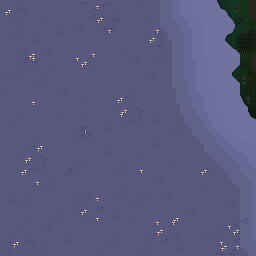
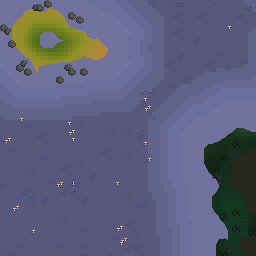
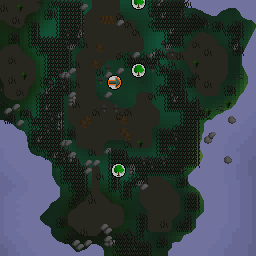
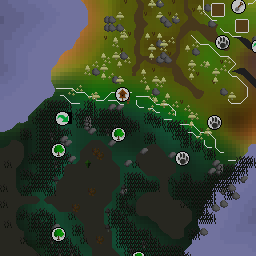
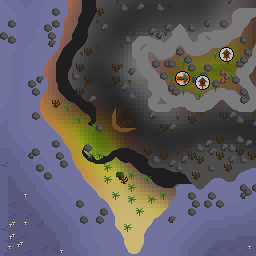
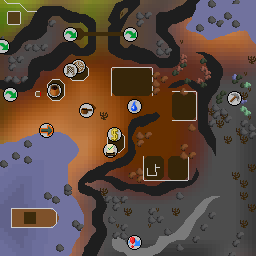
The six mushrooms are used in this order. Move on when yours falls, keeping food and a rake for the trip through the swamp.
- Find the currently grown sulliuscep and chop it until it falls. Only one of the six locations is active for you at a time.
- Move through the fixed sequence of locations, clearing obstacles as needed. Keep moving past tar monsters rather than standing in their attack range.
- Drop ordinary mushrooms when safe, keeping fossils, numulite and sulliuscep caps if you want them. Refill the landing pit before using another damaging bounce.
A felling axe gives extra XP but also loses some fossils on its no-loot rolls. Use an ordinary axe if collecting fossils matters more. Your fossils can fill museum exhibits for XP lamps, then spare fossils can support Prayer training. That is a separate use of the output, not immediate Woodcutting profit.
With a dragon axe and full Lumberjack, expect about 82,700 XP per hour at 65, rising to 101,900 at 99 with efficient movement.
Levels 77–99: Active bloodwood trees
A strong active option that alternates wounding trees with tapping their sap. It does not follow the normal log-chopping or felling-ration rules.
Getting there
Complete The Blood Moon Rises and use the quest’s route to Vampyrium. Three-tree groups are east of Apsul Hunting Ground and south of the Ruined Village. The Apsul banking shortcut needs 73 Agility and clearing with a pickaxe.
Bring and unlock
A good axe and empty buckets, available free from the nearby aranei bucket dealer. Keep space for filled buckets. An active bloodwood tree does not consume rations or receive Lumberjack XP.
- Click a tree with an empty bucket to start. Click your character twice to pull the axe back, then click the tree to chop.
- Learn the two-tick wound cycle, then work on a second tree while the first bleeds. Add the third when the sequence feels comfortable.
- Tap the other bleeding trees after their bars drain, then collect the filled buckets and place new empties. Every fully tapped tree awards 1,364 XP in total.
- Bank or process sap without leaving unfinished trees if possible: teleporting away resets partial progress.
Sap is untradeable. Turning it into seeking arrows needs logs, feathers, arrows and extra processing time, so a sap quantity is not immediate GE profit.
Finishing 100 sap buckets in an hour gives 136,400 XP. Include wounding, tapping and banking when timing your session. Skilled three-tree sessions can exceed 200,000 XP per hour.
Low-attention Woodcutting training
Choose long-lasting trees and decide whether to bank the logs. The time until an inventory fills can be shorter than the tree timer.

Levels 30–60: Willows at Draynor
An accessible relaxed choice, including on F2P. The nearby bank makes it easy to keep a modest log stack.
Getting there
The willow trees are south of Draynor bank. Low-combat accounts should avoid wandering into the dark wizards southeast of the village.
Bring and unlock
An axe and space for logs. A Forestry kit is useful on a Forestry world.
- Chop a willow, move when it falls and bank or drop the logs.
- Join nearby Forestry events if you want bark and rewards. Return to chopping once the event is complete.
Forestry events add XP and bark, but interrupt ordinary chopping. Join in for the rewards; return to the tree when the event ends.
24–40k XP/hr is a planning range for ordinary willow sessions, with no Forestry events added.
Switch to guild yews at 60 if you want longer waits between clicks and banked logs, or blisterwood at 62 after unlocking the tree.

Levels 60–90: Yews in the Woodcutting Guild
A slower but comfortable banked-log route. Use it for long chopping stretches rather than expecting it to beat teaks for XP.
Getting there
The Woodcutting Guild is in southwest Hosidius and requires 60 Woodcutting. A skills necklace gives a convenient teleport. F2P alternatives include Edgeville and Varrock Palace.
Bring and unlock
Bring your best axe. The guild gives an invisible +7 Woodcutting boost, helping you chop logs faster.
- Chop near the guild bank and move between yews as they deplete.
- Bank when full if you want the logs, then return. Forestry events do not spawn inside the guild.
Magic trees are even slower XP for longer waits and a different log value. Choose them for a specific supply or relaxed session, not just because level 75 unlocked them.
Guild yews give roughly 25,000–47,000 XP per hour as your level improves. Yews outside the guild lack its invisible boost, so expect slower chopping there.
Move to redwoods at 90. Blisterwood is a quieter alternative from 62 once you reach it during Sins of the Father.

Levels 62–90: Blisterwood
A tree that never depletes, although your character occasionally stops chopping. It is quieter than travelling between ordinary trees.
Getting there
Reach the blisterwood tree in Darkmeyer during Sins of the Father. You can start chopping there before finishing the quest. Use Drakan’s medallion to return to Darkmeyer.
Bring and unlock
Bring your axe and wear the full vyre noble outfit while travelling through Darkmeyer. Blisterwood logs are untradeable; drop them when your inventory fills if you are training for XP.
- Click the tree and keep chopping until the interruption sound signals that you stopped.
- Click again, then drop the logs when full. You do not need to find a second tree.
There is a one-in-ten stop chance per successful chop. That is why “never depletes” does not mean you can leave a whole inventory unattended.
Allow roughly 45,000–69,000 XP per hour for ordinary chopping as your level improves. A felling axe with rations, a crystal axe and an XP outfit can increase that. The logs cannot be sold.
At 90, redwoods offer longer stretches of chopping. Stay here if you prefer a tree that never depletes.

Levels 90–99: Redwoods
A reliable long-inventory choice for the final levels, with a close bank in the guild.
Getting there
Climb the redwood platforms in the Woodcutting Guild. The normal entry requirement is 90 Woodcutting; temporary dragon-axe boosts can allow earlier sessions.
Bring and unlock
Dragon or crystal axe. Use a log basket if banking logs, and bring rations with a felling axe.
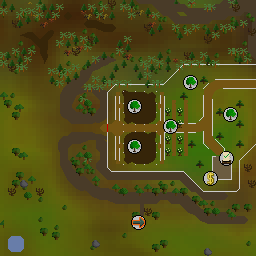
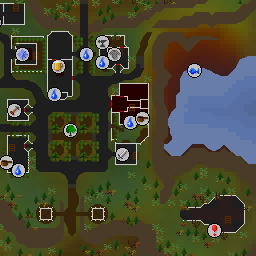
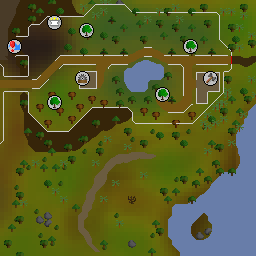
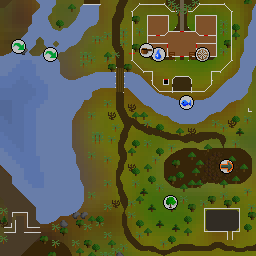
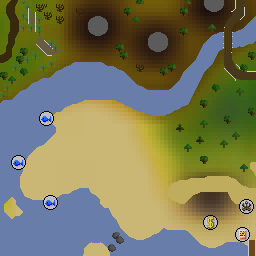
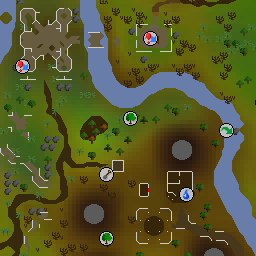
The guild is south of Hosidius. After entering, head west to the redwoods and climb the ladders to the chopping platforms; the bank is nearby.
- Click a section of the tree and keep chopping until it falls. Move to another section and continue.
- Bank at the guild chest or drop logs. Turning them into shafts takes extra time but can be a convenient way to clear inventory.
From 88, a dragon-axe special with Lightbearer and Preserve can maintain access much of the time. At 90 you can chop without maintaining that boost.
About 57.5k XP/hr at 90 to 65k at 99 with a dragon axe; crystal has a separate 70–75k reference. Extra banking is added to the chopping pace.

Levels 92–99: Rosewoods on Drumstick Isle
Very long tree timers for players who can reach the island. The ordinary island route drops logs, so it should not display banked-log profit.
Getting there
Drumstick Isle requires 79 Sailing without a boost. A planted rosewood on Fossil Island is an alternative at 92 Farming, but uses different depletion mechanics.
Bring and unlock
Axe and island access. A greater teleport focus on your boat can support a bank-and-return method if you want to keep the logs.
- Chop a rosewood and drop logs as the inventory fills. The tree can stand for about four minutes and 35 seconds.
- Move to the next tree when it falls. If banking by boat teleport, measure that complete route separately rather than using the dropping reference.
A planted rosewood gives easier banking but does not keep the island tree’s long timer. Treat those locations as different sessions.
85k XP/hr is the lower end of the published 85–90k dropping range. No retained log value is included.
Before these unlocks, willows or yews near a bank give a simpler session. Magic trees need fewer clicks, but their slow XP makes them a choice for the logs rather than a quick route to 99.
Other worthwhile methods
Useful outputs can make a slower tree worth chopping.

Levels 80–99: Ironwood on Sunbleak Island
An island alternative with many trees and useful logs. Build the bank before treating it as a banked-log route.
Getting there
Sail to Sunbleak Island with 72 Sailing. The bank chest requires 70 Construction to build.
Bring and unlock
Axe and your boat access. Bring construction supplies for the bank on the first trip if you intend to keep the logs.
- Cut the nearby ironwood trees and bank at the chest, or drop the logs for quicker XP.
- Choose Forestry events for their bark and unique rewards when wanted; they can lower pure chopping XP here.
The 80k reference uses a dragon axe. Crystal felling setups can be faster, but additional banking and event time still belong in your session.
About 80k XP/hr with a dragon axe before optional XP bonuses. Banking time is added from your entered trip duration.
Use Forestry for rewards as well as XP
Carry a Forestry kit when chopping eligible trees outside the Woodcutting Guild. Nearby players can improve the tree’s effective chopping level, and events award bark and extra XP. Join a Forestry world if you want more shared activity.
Take part in the event that actually spawned: pollinate matching flowers, follow the fox-trap signals or feed the struggling sapling rather than clicking the nearest object repeatedly. The event HUD and object options explain the current action; return to chopping when it finishes.
Use bark for rewards you want, such as a log basket or outfit pieces. A log basket reduces trips when keeping logs; it does not directly increase XP per chop. The planner uses a simple 26-log banking allowance, so lower your effective bank time when a basket reduces your trips.
Keep logs that support another goal
Teaks and mahoganies support Construction, several log tiers support bird houses, and higher logs can go into Fletching or Firemaking. Decide how much you need for those jobs before banking every log until 99.
Sulliuscep fossils are useful for the museum and later Prayer. Fill missing exhibits before converting every fossil. The XP lamps can help a slower skill rather than simply adding more Woodcutting XP.
On F2P, ordinary trees, oaks and willows are the simple XP route. Yews give banked logs at a slower pace. Members’ guild, quest and island rates should not be applied to a free-world location.
Time and cost for your goal
A felling axe consumes one ration on each successful action. Banking logs, Forestry events and travel all reduce the time spent chopping. Keep the axe, outfit and ration setup consistent when comparing the guide and planner.
Plan your Woodcutting route or compare method quantities and costs.
Felling axes: more XP, fewer logs
With rations available, a felling axe gives 10% extra XP and a 20% chance of no log on a successful action. It consumes one ration for that action, including the actions where a log is lost. Lumberjack’s bonus stacks multiplicatively.
The planner applies those effects together, and prices the ration stack. If you bank logs, fewer logs also means fewer banking trips. Extra rations consumed to restore run energy are additional.
Active bloodwood is different: it does not use rations or the outfit XP bonus. Crystal-axe charges and processing sap into seeking arrows are separate costs. Do not carry the normal-log arithmetic over to that activity.
Choose your next goal
Open the Woodcutting Training Planner for your method switches and time budget, or compare one method’s quantities in the Woodcutting Calculator.