
 Farming training
OSRS Farming 1–99 Guide
Farming rewards a routine more than a long session. Plant something worthwhile, leave it growing while you play, and make the next run easy to start. Use Tithe Farm when you want levels today or are working towards its rewards.
Updated
Fit your training around growing times
Most Farming XP comes from planting crops, leaving them to grow and returning to harvest or check their health. Tree runs give large bursts of XP; herb runs build supplies or earn coins. You do not need to stand beside a healthy patch while it grows.
Starting at level 1? See the quest route ↓Quest from 1 to 30 Farming
Optional quest route · order, requirements and next training method
This members’ route skips waiting for early crops to grow. It starts at 1 Farming, but Fairytale I has a longer quest chain and other skill requirements. Do those prerequisites before relying on the levels below.
Level 1 → 9 +1,000 Farming XP
Recipe for Disaster: Goblin generals
Before you start: Goblin Diplomacy and the opening of Recipe for Disaster. That opening needs Cook’s Assistant and 10 Cooking.
Inspect the frozen Goblin generals in Lumbridge Castle, then help Mudknuckles in the Goblin Village basement prepare their food.
Level 9 → 20 +3,500 Farming XP
Fairytale I – Growing Pains
Before you start: Lost City and Nature Spirit completed; Lost City requires 31 Crafting and 36 Woodcutting.
Start with Martin the Master Gardener in Draynor. Obtain the three requested items, enchant the secateurs and use them to defeat the Tanglefoot.
Nature Spirit awards 2,000 Defence XP. A 1 Defence pure should skip this step and train crops or bagged plants from 9 to 20 before continuing.
Level 20 → 30 +10,000 Farming XP
The Garden of Death
Before you start: 20 Farming, reached by the first two rewards.
Search the tent at the campsite in the southern Kebos Lowlands. Follow the stone-tablet clues and translate the messages to finish the quest.
Continue from level 30
At 30, start oak or willow tree runs and add apple trees to your fruit-tree circuit. Plant the trees, pay for protection or use compost, then return after they grow to check their health for the main XP reward.
Go to the training instructions →To start without this quest chain, plant potatoes in allotments or build bagged plant 1 in your house garden. Bagged plants avoid growth timers but cost coins; ordinary tree runs open at 15.
Levels count the XP listed above from a fresh start. Making your own supplies, quest fights or optional lamps can put you further ahead.
Fastest Farming training
For the fewest days to 99, combine tree runs with fruit trees and other large check-health rewards. For XP you can keep earning today, use Tithe Farm between runs.

Levels 15–99: A tree run from planting to replanting
A tree run is a short circuit of patches. Plant a sapling at each one, leave the trees growing while you do something else, then return for the check-health XP and replant. The tree you can afford determines the XP per visit; you are not meant to stand beside the patches until they grow.
Getting there
Start with Lumbridge, Varrock Palace, Falador Park, Taverley and the Tree Gnome Stronghold. Teleport to each town; use the spirit tree network after Tree Gnome Village. Add the Farming Guild patch at 65 and the Nemus Retreat patch when you can reach it conveniently.
Bring and unlock
A spade, saplings, noted protection payments and 200 coins per tree for removal. Keep a rake with the tool leprechaun. Make saplings in advance: seed into a filled plant pot with a trowel, water it, then bank it while it grows.

 Plant the grown sapling
A seed in a watered plant pot must become a sapling first. Clear the patch and plant it with a spade.
 Pay for protection if wanted
An oak’s payment is one basket of tomatoes. Other trees have their own payments; the gardener keeps the protected tree from dying.
- Leave it to grow
Return when the tree is mature, check its health for most of the cycle’s XP, then clear the patch for the next sapling.
- Check the health of the grown tree before removing it. That is where nearly all the XP comes from.
- Pay the gardener 200 coins to remove it, plant the next sapling and pay for protection. Check that the gardener accepted the payment before teleporting.
- Repeat the same circuit next time. Keep a bank tab of saplings and payments so preparing the run takes seconds.
Levels 15–30: Oak trees
481.3 XP per protected cycle. Protection costs 1 Tomatoes(5).

Levels 30–45: Willow trees
1,481.5 XP per protected cycle. Protection costs 1 Apples(5).

Levels 45–60: Maple trees
3,448.4 XP per protected cycle. Protection costs 1 Oranges(5).

Levels 60–75: Yew trees
7,150.9 XP per protected cycle. Protection costs 10 Cactus spine.

Levels 75–99: Magic trees
13,913.8 XP per protected cycle. Protection costs 25 Coconut.
Grow seeds into saplings in filled plant pots, or buy ready-grown saplings to save preparation. Compare both prices before buying. Keep GP aside for protection payments and teleports.
Compare XP rates for these methods
Active time comes from your minutes per run and patch count. It is not a sustainable XP-per-hour ceiling: trees grow while you are away, so compare XP per run and calendar days as well as time spent travelling.
Plant oaks from 15, willows from 30, maples from 45, yews from 60 and magic trees from 75. Keep doing runs to 99, choosing a cheaper sapling when the extra XP is too expensive. Fruit-tree runs can be added from 27; they do not replace these patches.

Levels 27–99: Fruit trees: the daily backbone
Fruit trees fit a daily routine. Visit each patch, check the grown tree’s health, pick its fruit and plant the replacement. Most of the XP comes from that health check, so repeatedly picking regrown fruit is not the same as doing another complete tree cycle.
Getting there
The first convenient circuit is Catherby, Brimhaven, Tree Gnome Stronghold and Tree Gnome Village. From Catherby, run east to the patch, then charter to Brimhaven. Use the spirit tree network for the two gnome patches; follow Elkoy out of the village maze. Add Lletya with a teleport crystal after starting Mourning’s End Part I, Kastori in Varlamore, and the Farming Guild at 85.
Bring and unlock
A spade, saplings, noted protection payments and 200 coins per tree for removal. Keep a rake with the tool leprechaun. Make saplings in advance: seed into a filled plant pot with a trowel, water it, then bank it while it grows.
- Check health, pick all six fruit, then pay the gardener to clear the tree. Use the fruit on a tool leprechaun to note it when inventory space runs out.
- Plant the replacement sapling and pay for protection. Fruit from one tier often protects the next: pineapples protect papayas, papayas protect palms and coconuts protect dragonfruit.
- Come back on the following day. Fruit trees take about 16 hours to grow, so one daily run is a comfortable routine. Picking regrown fruit alone does not award another check-health reward.
Levels 27–51: Apple fruit trees
1,272.5 XP per protected cycle, including the first six fruit. Protection costs 9 Sweetcorn.

Levels 51–57: Pineapple fruit trees
4,791.7 XP per protected cycle, including the first six fruit. Protection costs 10 Watermelon.

Levels 57–99: Papaya fruit trees
6,380.4 XP per protected cycle, including the first six fruit. Protection costs 10 Pineapple.

Levels 68–81: Palm fruit trees
10,509.6 XP per protected cycle, including the first six fruit. Protection costs 15 Papaya fruit.

Levels 81–99: Dragonfruit fruit trees
17,895 XP per protected cycle, including the first six fruit. Protection costs 15 Coconut.
Keep the circuit short enough that you actually do it. Four patches every day beat seven patches on a route you keep putting off.
Compare XP rates for these methods
Active time comes from your minutes per run and patch count. It is not a sustainable XP-per-hour ceiling: trees grow while you are away, so compare XP per run and calendar days as well as time spent travelling.
Add apple-tree runs at 27, then consider pineapples at 51 and papayas at 57. Papayas can remain a good-value choice to 99. Palms from 68 and dragonfruit from 81 give more XP per run if you can afford their saplings and protection.
An impressive XP-per-hour figure for a five-minute tree run is not an hourly rate you can repeat. Compare days to the goal, XP per run and minutes spent playing.
Low-attention Farming training
Farming is ideal for short visits separated by other activities. The plants keep growing while you play elsewhere or log out.
One fruit-tree run a day. Keep saplings and protection payments together in the bank. Use a circuit you can comfortably repeat, then leave the next batch growing. You do not need to visit every unlocked patch to make steady progress. See one fruit-tree run a day.
Keep the routine sustainable
Pick a daily run you can finish before choosing the most expensive seeds. An Iron should use available seeds and build a supply through contracts, bird houses and combat; a main can buy them but still needs a way to sustain the cost.
The planner compares one main tree family at a time. Its calendar adds the required runs at your selected frequency and includes a growing interval for the first harvest. Existing grown trees, other crops and questing between runs can shorten your actual finish date.
Protection is included in tree quantities and costs. The planner does not silently turn every unprotected tree into a successful harvest. To compare ultracompost instead, use the single-crop calculator and allow for lost crops when planning the schedule.
Other worthwhile methods
Use other patches for supplies and GP rather than expecting herbs to match tree-run XP.
Herb runs. Choose seeds by expected yield, protection and what you will use or sell. An Iron may prefer a specific herb for potions even when another seed looks more profitable. The herb-run guide prices the complete run. Herb-run guide and calculator.

Levels 1–15: Bagged plants for the opening
A short, paid way past the opening levels. The plants also give Construction XP.
Getting there
Buy plants from the garden supplier in Falador Park or the Farming Guild. A house in Rimmington puts Phials nearby for unnoting.
Bring and unlock
A house garden, watering cans, bagged plants and coins. Level 1 Construction is enough for bagged plant 1.
- Enter building mode and build a plant in a plant hotspot.
- Remove it and build another. Each build uses one plant and some water.
- Refill the cans and unnote more plants with Phials when needed. Stop at your chosen tree or quest threshold.
Allow for watering-can refills between batches. Early quest rewards are usually a better use of your time and GP than buying lots of bagged plants.
Use bagged plants for a paid opening to 15, then begin oak-tree runs. Quest XP can replace this step entirely, so check those rewards before buying a large plant stack.
Levels 34–99: Tithe Farm: water in the same order
The seed tier changes the XP, while the planting and watering routine stays the same.
Getting there
Go to the farm in southern Hosidius. Once you have visited, use the Tithe Farm minigame teleport when it is available.
Bring and unlock
A seed dibber, spade and enough filled watering cans for your route. Take the highest usable seeds from the table. Weight reduction and run-energy restoration help; Gricoller’s can is a later convenience.
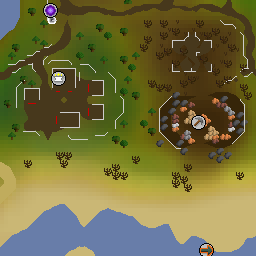
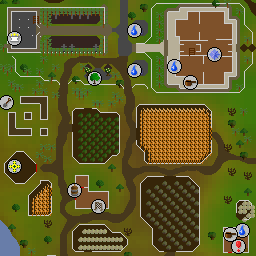
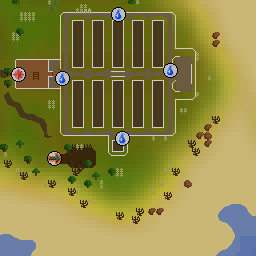
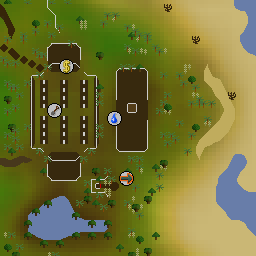
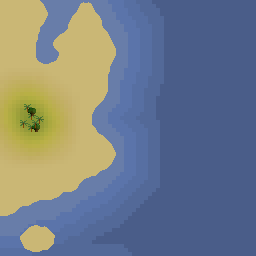

The farm is east of Hosidius. Enter through the building on its western side, choose seeds for your Farming level and fill your watering cans before planting.
- Begin with 20 plants. Plant and immediately water each one, following a route you can repeat without crossing back through the field.
- Return to the first plant and water everything in the same order. Repeat for the next growth stage. Do not start extra plants while the earlier ones need water.
- Harvest the fully grown plants and begin the next batch. Mature plants cannot die, so use that moment to refill your cans if necessary.
- Deposit fruit in the sack and finish a full 100-fruit cycle before leaving. The later deposits carry a large part of the XP and point reward.
Levels 34–54: Tithe Farm: Golovanova
The seed tier changes the XP, while the planting and watering routine stays the same.
Levels 54–74: Tithe Farm: Bologano
The seed tier changes the XP, while the planting and watering routine stays the same.
Levels 74–99: Tithe Farm: Logavano
The seed tier changes the XP, while the planting and watering routine stays the same.
A 25-plant route is worthwhile once the timing is comfortable. It leaves less recovery time after a missed click; near-perfect high-level runs can exceed 110k XP/hr. Around 95k XP per hour is a more forgiving target with the top-tier fruit.
Planning references: 25k / 58k / 95k XP/hr by seed tier, allowing time between batches. Rates include harvesting and deposits; they are not XP from planting alone.
Use golovanova seeds from 34 to 54, bologano from 54 to 74 and logavano from 74 to 99. Change seeds as soon as the next tier unlocks; the watering routine stays the same and the higher tier gives more XP.
Add herb runs for supplies or profit
A herb run can sit alongside either tree route. Bring seeds, ultracompost, a seed dibber, spade and magic secateurs. Clear, compost and plant each patch, then use harvested herbs on the leprechaun to note them. Wearing the secateurs improves herb yield; a seed dibber does not replace them.
Use disease-free patches at Troll Stronghold, Weiss and Hosidius when their quests or diary requirements are met. Keep your most expensive seeds for protected patches if losing one would noticeably hurt. Ultracompost improves yield and reduces disease elsewhere; it does not guarantee survival.
On a main, compare the seed cost with a realistic harvest, then include the whole circuit’s time. On an Iron, grow herbs for potions you need: ranarr for prayer potions, snapdragon for super restores and torstol for later combat supplies. A high XP herb is not automatically the best use of a scarce seed.
The tree planner keeps herb XP separate because harvests, unlocked patches and seed choices vary. Use the Farming Calculator for a crop’s yield and cost before adding it to the same trip.
Hardwoods, calquats and the Farming Guild
After Bone Voyage, the three Fossil Island hardwood patches are an easy addition every few days. Plant teaks at 35 or mahoganies at 55, using a digsite pendant and the barge or your unlocked island transport. Ultracompost can be much cheaper than protection, but a dead tree still costs a seed and a visit.
At 72, put a calquat near Tai Bwo Wannai on your circuit. A Tai Bwo Wannai teleport scroll is convenient after the relevant quest unlock; fairy ring CKR and a run north is the alternative. Eight poison ivy berries protect it. More calquat and hardwood patches are available through Varlamore and Sailing, so extend the circuit when their travel fits what you already do.
The Farming Guild opens at 45, with more sections at 65 and 85. Do contracts you can finish with seeds on hand, and downgrade a request that would stall you. Leave several useful crops grown until a contract asks for them; checking health too early can throw away that shortcut.
Plant Hespori when you have a seed and 65 Farming. Bring combat gear, kill the surrounding flowers when they open to remove its immunity, and click to escape the entangling attack. Its bottomless compost bucket is a useful long-term reward, but the drop is not guaranteed.
Time and cost for your goal
Choose a daily seed budget you can maintain. A cheaper fruit tree may take more days but little extra time per run. Keep the cost of protection, clearing, sapling preparation and teleports alongside the seed price.
Plan your Farming route or compare method quantities and costs.
Clicks and client settings
Track the run and shorten the travel menus
These RuneLite plugins are included with the client. Find them in the plugin configuration sidebar, turn them on and open their settings.
Time Tracking: know when to return
Enable Time Tracking and open its Farming tab after visiting your patches. It records the crops and compost that RuneLite has seen. Turn on Show Relative Time for a countdown to the next harvest, then fit your next run around another activity. Check ordinary patches for disease when you return.
Menu Entry Swapper: put your teleport first
Enable Menu Entry Swapper and Customizable left-click under Item Swaps. Shift-right-click your teleport item and choose the destination or teleport action you use for this run. Choose the destination closest to your next patch. On mobile, use the item’s long-press menu editor and move the same action to the top.
Choose your next goal
Training for profit? Read the herb-run money-making guide for the setup and a comparison using GE prices.
Open the Farming Training Planner for your method switches and time budget, or compare one method’s quantities in the Farming Calculator.